
Hoodies vs Sweatshirts for Brands: How to Choose
A hoodie and a sweatshirt can look alike on a hanger, yet they differ in cost, print space and the customers who buy them. This guide compares the two so you can decide which one belongs in your range.

- A hoodie adds a hood, a drawcord and usually a pouch pocket. A sweatshirt is a crewneck with fewer parts.
- Sweatshirts leave a clean, flat chest for logos. Hoodies suit casual, streetwear and training ranges.
- Fabric type and weight shape the feel more than the garment name does.
- Many brands carry both and use the same fleece across the two.
What Actually Separates the Two
Both garments are usually knitted from fleece or French terry and worn as a mid layer. The difference is in the construction.
A hoodie has a hood, a drawcord and eyelets, and most styles add a front pouch pocket or a zip. A sweatshirt has a ribbed crew neckline and no hood. That sounds minor, but it changes pattern pieces, trims, sewing time and fabric use. A hood takes more fabric than a neckband, so a hoodie generally costs more to make than a sweatshirt in the same fleece. Exact pricing depends on fabric, decoration and quantity, and it is confirmed in the quotation.
The two also behave differently on a customer. A hood sits behind the neck and changes how a jacket or coat layers over it. A crewneck sits flat and works under a jacket without bunching.
Hoodie vs Sweatshirt at a Glance
Use this table as a starting point when you plan which styles to sample first.
| Factor | Hoodie | Sweatshirt |
|---|---|---|
| Neckline | Hood with drawcord, sometimes a zip front | Ribbed crewneck |
| Components | Hood lining, eyelets, drawcord, often a pouch pocket | Neckband, cuffs, hem band |
| Print and logo space | Chest, sleeve and back; a front print can be interrupted by a pocket or zip | Open chest and back, easy to center |
| Typical look | Casual, streetwear, training | Classic, school, staff, minimal brands |
| Layering | Hood can crowd a jacket collar | Sits flat under outerwear |
| Relative cost to make | Usually higher, because of the hood and trims | Usually lower, with fewer parts |
Which One Fits Your Customer
Start with who will wear the garment and where. The three styles below show how the same range can cover different buyers.
Hoodie ART# MI-8603
A charcoal pullover hoodie with a front pouch pocket.

Hoodie ART# MI-8605
A white zip-up hoodie with black colour-block panels.
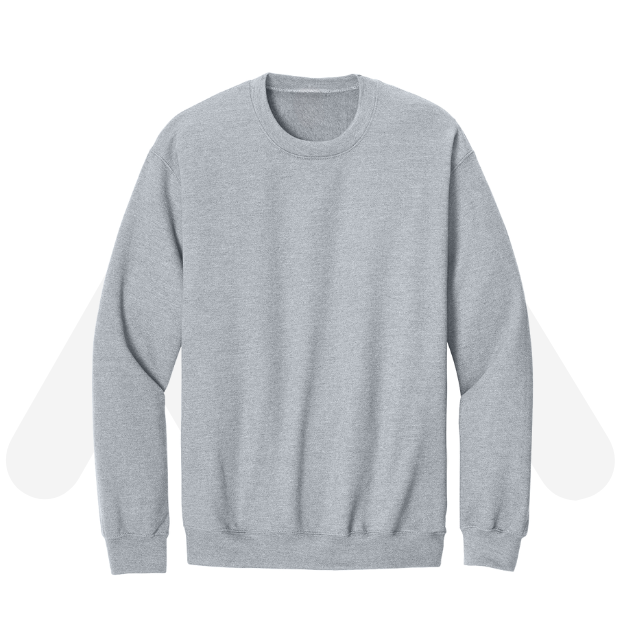
Sweatshirt ART# MI-8804
A grey marl crewneck sweatshirt in a plain solid colour.
Pullover hoodies are the usual pick for gym brands, streetwear labels and campus merchandise. Zip hoodies suit customers who put them on and off during training. Crewneck sweatshirts tend to suit schools, clubs with a formal look, staff wear and brands with a quieter style. If you sell to several of these groups, a small range with one of each is a sensible first order. You can see the full lines in our hoodies and sweatshirts categories.
Fabric and Weight
The garment name tells you little about how it feels. Two hoodies can be very different if one uses a heavy brushed fleece and the other a light French terry. Common choices include brushed cotton fleece, French terry, cotton-polyester blends and polyester fleece.
Weight is measured in GSM, grams per square meter. As a rough guide, lighter fabric suits spring and layering, while heavier fleece suits cold weather and gives a more structured drape. Heavier fabric also adds cost and shipping weight, so match the weight to the season you sell into.
Hoods need fabric that holds its shape, so a very light knit can make a floppy hood. A sweatshirt hides this problem, which is one reason a lighter fabric works more often in a crewneck.
Logos and Decoration
Garment shape affects where a logo sits well. A sweatshirt gives a wide, uninterrupted chest, so a centered print or embroidered logo is easy to place. On a pullover hoodie, a pouch pocket limits how low a chest graphic can go. On a zip hoodie, a center-front design is split by the zip, so most brands use a left-chest logo or a back print instead.
Our product pages list printing methods such as digital, sublimation, screen printing, embossing, metal foil, high-density, DTG, heat transfer, crackle and reflective, along with logo options such as satin stitching, silk printing, and normal or 3D embroidery. Which of these suits your fabric is worth confirming at the sample stage. Our comparison of sublimation printing vs embroidery covers the main trade-offs.
How to Decide for Your Range
- Name your customerWrite down who wears it and where: gym, campus, staff, or casual.
- Pick the seasonChoose a fabric weight that suits when you sell.
- Choose the logo positionDecide whether the design needs a clean chest or can work around a pocket or zip.
- Set a price ceilingWork back from your retail price to see whether the extra hood cost fits.
- Sample bothCompare a hoodie and a sweatshirt in the same fabric before you commit to volume.
What to Put in Your Brief
A clear brief makes the quotation faster and more accurate. Include these items:
- Style type: pullover hoodie, zip hoodie or crewneck sweatshirt
- Fabric type and target weight, or a reference garment
- Colors, with a Pantone code or physical swatch if exact shades matter
- Logo artwork in vector format and a placement sketch
- Size range and quantity per size
- Label and packaging details if you want private label
Minimum order, lead time and sample terms are confirmed in the quotation. For the full process, see our guide to getting a custom sportswear quote, and our page on custom hoodie manufacturers in Sialkot for more on hoodie construction.
Common Mistakes
Treating them as the same product
A hoodie and a sweatshirt need different trims and patterns, so quote and sample them separately.
Ignoring print placement
A pocket or zip can cut a design in half. Check placement on a sample.
Choosing weight by name
Ask for GSM and a swatch instead of relying on a label such as heavyweight.
Skipping a wash test
Fleece can shrink or pill. Wash a sample before you approve bulk.
Frequently Asked Questions
Is a hoodie more expensive to make than a sweatshirt?
Usually, yes, because the hood, drawcord, eyelets and pocket add fabric and sewing steps. The exact gap depends on fabric and decoration and is confirmed in the quotation.
Can I order both in the same fabric?
Yes. Using one fleece across both styles keeps colors and feel consistent, and it can simplify your range.
Which sells better for a new brand?
It depends on your audience. Hoodies suit gym and streetwear buyers, while sweatshirts suit schools, staff wear and minimal brands. Sampling one of each is a low-risk way to test.
Can I use my own label and packaging?
Private label options are available, including labels and branding. Share your requirements and they are confirmed in the quotation.
Ready to Plan Your Hoodie and Sweatshirt Range?
Send your styles, colors and artwork. Maswiz Industries will review your brief and reply with the next steps.


