
Sportswear Fabric Types Explained
Sportswear fabric types decide how a garment feels, stretches, and lasts. However, fabric names can confuse new buyers. This guide explains the most common sportswear fabric types and how to match each one to a product.
- The short version
- Who it is for
- Five fabric families
- Myths and facts
- Cost drivers
- Swatch scorecard
- Products
- Quick answers
Sportswear fabrics in short
For the full picture of our factory, read our overview of a custom sportswear manufacturer in Sialkot.
Who should read this guide
Fabric choice shapes cost, comfort, and returns. For example, the wrong knit pills after a few washes. Likewise, the wrong blend feels hot.
- Startups building a first range
- Clubs choosing fabric for team kit
- Buyers comparing quotes with different fabrics
Five sportswear fabric types and where they fit
Polyester
Polyester is light, strong, and quick-drying. It also holds sublimated prints very well.
Our take: Use it for team kit, jerseys, and training tops. See our sports uniforms guide and decoration guide.
Nylon
Nylon feels smooth and soft. It is also strong, so brands use it for leggings and jackets.
Our take: Consider it for premium leggings and shells. See our soft shell jacket guide.
Spandex and elastane blends
Spandex adds stretch and recovery. Brands blend it with polyester or nylon.
Our take: Use these blends for leggings, bras, and sets. See our activewear guide and yoga sets guide.
Cotton and cotton blends
Cotton feels soft and breathable. However, it dries slowly, so blends often perform better.
Our take: Use it for casual wear. See our hoodie guide and T-shirt guide.
Mesh and fleece
Mesh adds ventilation, while fleece adds warmth. Each solves a different problem.
Our take: Use mesh for panels and fleece for cold weather. See our winter sportswear guide and gym hoodie guide.
Myths about sportswear fabrics
What raises and lowers fabric cost
Cost follows your choices. As a result, the right mix of sportswear fabric types keeps quality high and price steady.
Raises the cost
- Premium nylon-spandex blends
- Special finishes such as water repellency
- Heavy brushed fleece
- Small fabric runs in unusual colors
Lowers the cost
- Standard polyester knits
- Common colors
- Fewer fabric types per range
- Larger fabric orders
How to test a fabric swatch
Test every swatch the same way. In addition, read our fabric guide for more detail.
| Test | Pass if | Fail if |
|---|---|---|
| Hand feel | Soft and even | Rough or uneven |
| Stretch and recovery | Returns to shape | Bags or stays stretched |
| Opacity | Stays opaque when stretched | Turns sheer |
| Drying speed | Dries quickly after a wash | Stays damp |
| Pilling | Surface stays smooth | Pills after rubbing |
For background, see the polyester entry on Wikipedia.
Products by fabric

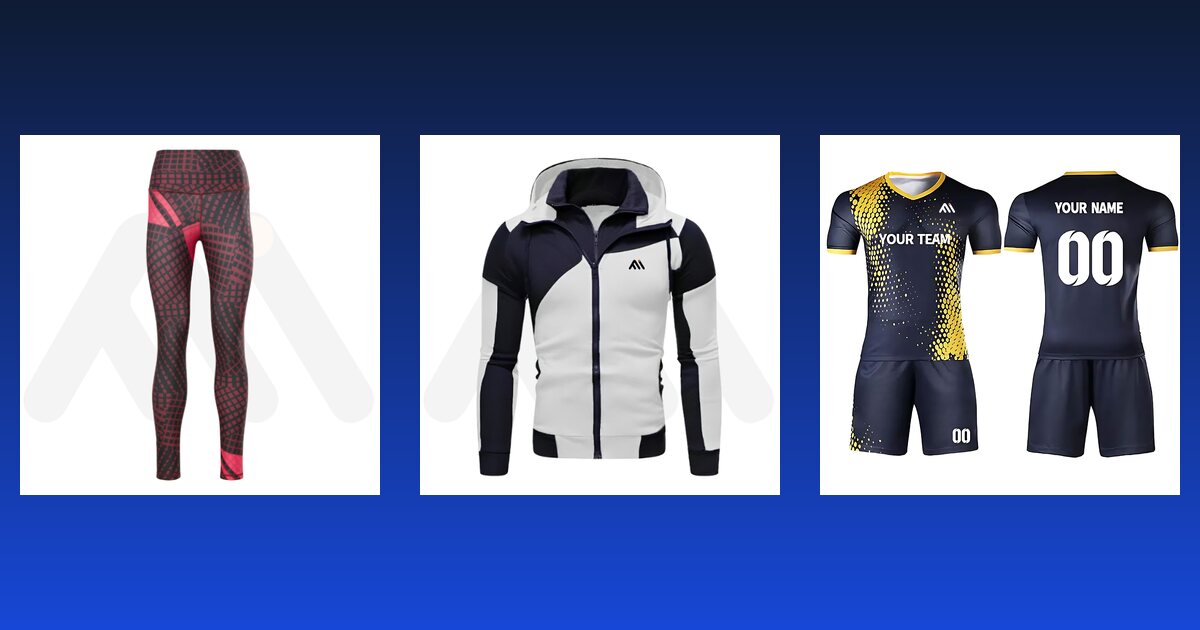
Fitness Wear Women Legging MI 9605
Stretch blend for leggings.

Causal Wear Hoodies MI 8605
Cotton blend or fleece for hoodies.

Soccer Uniforms ART# MI-2005
Polyester knit for team kit.
Most buyers test several sportswear fabric types before they choose. Ask us for swatches, and see our private label guide for branded ranges.
Quick answers
What are the most common sportswear fabric types?
The most common types are polyester, nylon, spandex blends, cotton blends, mesh, and fleece.
Which fabric is best for sublimation?
Polyester is the best choice, because sublimation inks bond with polyester fibers.
Can I get fabric swatches before ordering?
Yes. Ask for swatches in your colors, and test them before you approve bulk production.
Can I get private label garments in these fabrics?
Yes. Private label production includes custom labels and packaging. See our OEM, ODM, and private label explainer.


